Santanu Bhargav*
Independent Researcher
bhargava.publications@gmail.com
International Journal of Scientific Research and Technology
An open access peer-reviewed journal aiming to communicate high quality original research work that contribute scientific knowledge related to the field of Science and Technology.
(ISO 9001:2015 Certified International Journal) ISSN: 2394-7063; CODEN(USA): IJSRT00
Research Paper | Open Access
Volume 02 | Issue 10 | Article Id IJSRT/250309009
Santanu Bhargav*, A Study of How Writers from Northeast India Use English to Narrate Unique Cultural Experience: Special Reference to Mamang Dai and Arnab Jan Deka, Int. J. Sci. R. Tech., 2025, 2 (10), 62-66. https://doi.org/10.5281/zenodo.17277568
Abstract
This paper examines how two prominent writers from Northeast India—Mamang Dai (Arunachal Pradesh) and Arnab Jan Deka (Assam)—mobilize English to narrate place, memory, and identity. Drawing on poems, novels, bilingual projects, paratexts (interviews), and secondary criticism on Indian English and North-East Indian Anglophone literature, the study shows that both writers (i) indigenize English through lexical borrowing, rhythm, and imagery grounded in riverine–mountain ecologies; (ii) use English strategically for cross-regional circulation while retaining indigenous epistemologies; and (iii) adopt hybrid/bilingual tactics (including translation and collaborative bilingual publication) to preserve local textures and transmit them to wider publics. The analysis combines close reading with discourse-analytic attention to code-mixing/hybridity frameworks and situates the findings within current scholarship on Northeast Indian Anglophone writing.
Keywords
Northeast India; Indian English; linguistic hybridity; code-switching; indigenous modernity; Mamang Dai; Arnab Jan Deka
Introduction
English in India has moved from colonial imposition to a plural, vernacularized resource for interethnic communication and literary expression. Contemporary debates emphasize both its national connective function and its tensions with linguistic diversity. These debates are especially pronounced in the Northeast, a region of intense multilingualism and dense oral traditions. In this milieu, Mamang Dai and Arnab Jan Deka exemplify distinct yet convergent ways of “making English local”: Dai’s mountain-river poetics and historical fiction embed Adi cultural memory; Deka’s cross-genre and bilingual projects (English/Assamese) stage the Brahmaputra as archive and pathway.
2. Literature Review
Two strands of scholarship frame this study:
- Northeast Indian Anglophone Literature (NIAL): Recent overviews identify a vibrant Anglophone corpus from the region that negotiates “insides/outsides,” mobility, and marginalization while retooling English to carry local myth and memory.
- English, Hybridity, and Code-switching: Indian English writing often features code-mixing, localized lexicon, and culture-specific narrative structures; recent work underscores hybridity as both linguistic strategy and identity politics. Though much of this research is pan-Indian rather than NE-specific, its insights apply to Dai’s and Deka’s indigenization of English.
Interviews and critical profiles of Mamang Dai further illuminate her self-positioning as a writer who translates land, ritual, and memory into English while drawing on journalism and folklore.
3. Objectives
- To analyse how Dai and Deka adapt English to represent Northeast Indian cultural experiences.
- To identify textual strategies (lexical indigenization, imagery, narrative structure, bilingual presentation).
- To relate these strategies to broader debates on Indian English, indigeneity, and linguistic plurality.
4. Research Methodology
Design: Qualitative, text-analytic case study of two authors.
Materials:
- Primary texts: poems/poetics pages by Mamang Dai; novelistic/poetry and bilingual publications by Arnab Jan Deka.
- Paratexts: author interviews and profiles.
- Secondary criticism: NIAL overviews; studies of hybridity/code-switching in Indian English.
Methods: Close reading; intertextual comparison; discourse analysis of lexical choices and imagery; contextualization with critical scholarship. Citations are provided to online sources of record (press, journals, publishers), with short quotes (≤25 words) under fair use.
5. Analysis
5.1 In general view:
The Northeast of India, comprising eight states, has long been characterized by its ethnic diversity, vibrant oral traditions, folklore, and complex socio-political realities. However, mainstream Indian English literature historically marginalized voices from this region. Especially since the late 20th century, writers from the Northeast—such as Temsula Ao, Easterine Kire, Mamang Dai, Dhruba Hazarika, Mitra Phukan, Indira Goswami, Siddhartha Deb and many more—have increasingly employed English not just as a colonial legacy but as a creative tool to articulate local histories, myths, conflicts, and lived experiences. Their writing illustrates the ways in which English, a global language, becomes indigenized to convey deeply rooted regional identities.
a) English as a Medium of Negotiation
- Between Local and Global: English allows Northeastern writers to bridge their local realities with a global readership. For example, Easterine Kire’s novels use English to narrate Naga oral traditions, making indigenous stories legible to audiences far beyond the region.
- Subversion of the Colonial Tongue: By writing in English, these authors reclaim a language of power and reshape it into a vessel of marginal voices. English ceases to be merely foreign; it becomes a hybrid language carrying regional rhythms, cadences, and idioms.
b) Narrative Strategies
- Incorporation of Oral Traditions: Writers often weave in folktales, myths, and oral histories. Temsula Ao’s Laburnum for My Head reflects the oral storytelling tradition, blurring the line between myth and realism.
- Use of Local Lexicon: English is peppered with untranslated words from Assamese, Mizo, Khasi, or Naga languages, preserving cultural specificity. This “code-switching” not only resists homogenization but also asserts identity.
- Landscape as Character: The region’s geography—its hills, rivers, forests—becomes central to narration. Mamang Dai, for instance, treats the landscape of Arunachal Pradesh as an archive of memory and spirituality.
- Interplay of Memory and Trauma: Given the region’s history of insurgency, ethnic strife, and militarization, narratives often explore collective trauma. Siddhartha Deb’s The Point of Return fictionalizes political unrest while retaining human intimacy.
c) Representation of Culture and Identity
- Multiplicity of Identities: Writers highlight pluralism and hybridity rather than singular “Indian” identity. Each ethnic group’s rituals, festivals, and oral practices complicate the nation’s idea of homogeneity.
- Gendered Perspectives: Women writers like Indira Goswami and Easterine Kire foreground women’s experiences—ranging from domestic struggles to spiritual strength—placing them at the center of cultural memory.
- Food, Ritual, and Song: Everyday cultural markers—rice beer, folk songs, harvest rituals—are often given narrative importance, grounding English literature in lived cultural textures.
d) Challenges and Critiques
- Marginalization within Indian English Literature: Despite critical recognition, Northeastern voices remain peripheral in national syllabi and publishing industries, which often privilege metropolitan centers.
- Risk of Exoticization: Some argue that writing in English for wider audiences may encourage self-exoticization, where local cultures are stylized for consumption by outsiders.
- Translation of Experience: English cannot always carry the full essence of oral metaphors or indigenous linguistic nuances, leading to partial representation.
In particular view:
5.2 Mamang Dai: River–Mountain Memory in English
Background & recognition. Dai (b. 1957), a poet, novelist, and journalist from Arunachal Pradesh (Adi community), received India’s Padma Shri (2011) and Sahitya Akademi Award (2017) for The Black Hill. Her oeuvre spans poetry (River Poems), folklore, and novels (The Legends of Pensam, The Black Hill). Poetic English indigenized. Dai’s lyrics are renowned for elemental imagery; a representative opening from “Small Towns and the River” reads: “Small towns always remind me of death.” The line’s stark cadence and ritual motif (“only the rituals are permanent”) pair Anglophone minimalism with indigenous cosmology, while the river functions as spiritual and communal chronotope.
Close Reading 1: “Small Towns and the River” (from River Poems)
“Small towns always remind me of death. Our children break their toys with no regrets.”
- The declarative opening frames small towns through ritual temporality, not geography. Death is cyclical, consistent with Adi philosophies of continuity.
- The second line naturalizes impermanence; “no regrets” adopts an everyday English idiom but infuses it with ritualized detachment.
“Life and death, life and death, only the rituals are permanent.”
- Repetition of life and death mimics chanting, reflecting oral performance modes.
- The paradox “only the rituals are permanent” locates endurance not in matter but in practice, emphasizing ritual continuity.
Commentary: Dai’s short English lines enact ritual temporality. Anglophone minimalism is recharged with oral cadence, allowing Adi cosmology to shape the rhythm of English.
Close Reading 2: Excerpt from The Legends of Pensam (2006)
“It was the time of stories, when the earth was new and the mountains walked and the rivers sang.”
- “the time of stories” situates narrative within mythic temporality.
- “mountains walked” translates oral myths of animate geography, using English verbs to enact animism.
- “rivers sang” attributes voice to ecology, aligning with ritual storytelling where rivers are sonic agents.
Commentary: English prose here becomes a cosmological register, not linear history. Dai adapts narrative English into a mythopoetic form that mirrors oral traditions.
Technique summary (Dai):
- Lexicon & rhythm: everyday English vocabulary with ritual cadence.
- Focalization: community memory, myth-history braid.
- Function: English as bridge to national/global readership without diluting local cosmology.
5.3 Arnab Jan Deka: Bilingual Bridges and the Brahmaputra Imaginary
Background & corpus. Deka (Assam) writes across English and Assamese (fiction, essays, biography). His works include Brahmaputra and Beyond, Golden Years in Jorhat Engineering College, and Three Short Stories of Arnab Jan Deka (a volume mapped to an MA-English syllabus). He is also notable for bilingual literary experiments with the Brahmaputra as central motif.
Close Reading: A Stanza of Sunlight on the Banks of Brahmaputra (2009, with Tess Joyce)
(English version)
“On the banks of Brahmaputra, the children launch paper boats, carrying sunlight in their fragile sails.”
- Naming Brahmaputra without gloss centers Assamese geography in English.
- Children launching paper boats references a common Assamese childhood practice, translated accessibly into English.
- Sunlight in fragile sails fuses ephemerality with vitality: fragile vessels carrying cosmic light.
(Assamese transliterated parallel)
“Brahmaputrar kinatem sishu-bur kaghazar nouka sailai, suryor kiron bhore sailar majot.”
- Assamese version carries different sonic rhythm (e.g., sishu-bur for children).
- Parallel printing allows co-presence of both registers: English for wider circulation, Assamese for cultural resonance.
Commentary: This bilingual stanza enacts parallel bilingualism: English transmits imagery to non-Assamese audiences, Assamese sustains rhythm and intimacy. English is not a replacement but a companion language, preserving indigenous texture.
Technique summary (Deka):
- Bilingual architecture: paired English/Assamese texts.
- Lexical strategy: English phrasing retains Assamese place-names and imagery.
- Function: English as outward-facing medium; Assamese as cultural anchor.
5.4 Convergences and Contrasts
- Shared: Both use riverine/landscape imagery to embed indigenous worldviews into English; both leverage English as circulation medium.
- Differences: Dai’s emphasis is lyrical myth-history within English, while Deka focuses on bilingual publication and cultural diplomacy.
6. Findings
Finding 1: English localized via ritual cadence (Dai) and riverine imagery (both).
Finding 2: Bilingual formats (Deka) preserve texture and expand reach.
Finding 3: English functions as cultural “relay” language: enabling circulation while protecting local idioms.
CONCLUSION
Mamang Dai and Arnab Jan Deka demonstrate two complementary strategies of indigenizing English in Northeast Indian literature. Dai’s spare, elemental English renders Adi cosmology in poetic rhythm and mythopoetic prose; Deka’s bilingual projects sustain Assamese while situating the Brahmaputra within a global Anglophone frame. Their works show that English in the Northeast is not imposed but adapted—a medium of cultural memory, ecological voice, and transnational dialogue.
REFERENCE
Primary / Author-focused
- Dai, Mamang. River Poems (poems “Small Towns and the River,” “No Dreams”, online selections). Poetry International. (Accessed Aug 2025).
- Interviews and profiles. Writers in Conversation (2017); Rupkatha interview (2022).
- Recognition and works overview: Padma Shri (2011); Sahitya Akademi Award (2017, The Black Hill); works list.
- The Legends of Pensam (critical overview of folklore elements). JETIR (2023).
- Deka, Arnab Jan & Tess Joyce. A Stanza of Sunlight on the Banks of Brahmaputra (bilingual English–Assamese). Publication data and reception summary.
- Deka, Arnab Jan. Brahmaputra and Beyond (listing). Amazon
- Three Short Stories of Arnab Jan Deka: As per Syllabus… Google Books metadata.
Secondary / Contextual
- South Asian Review (Special Issue). “Northeast Indian Anglophone Literature (NIAL).” (2023).
- Journal of Namibian Studies. “The ‘NEO Literature’ of North East India.” (2023).
- ShodhKosh / Granthaalayah Arts Journal. “The Role of English in India’s Literary Festivals and Writing” (2025).
- KUEY Journal. “Bilingualism and Its Literary Implications in India.” (2024/25).
- IJMRA IJRSS. “Language and Identity in Indian English Writers’ Works.” (2025).
- The New Yorker. “Globish for Beginners” (historical overview of English in India). (2010).
- The New Yorker. “Should a Country Speak a Single Language?” (on linguistic plurality, with India focus). (2024).
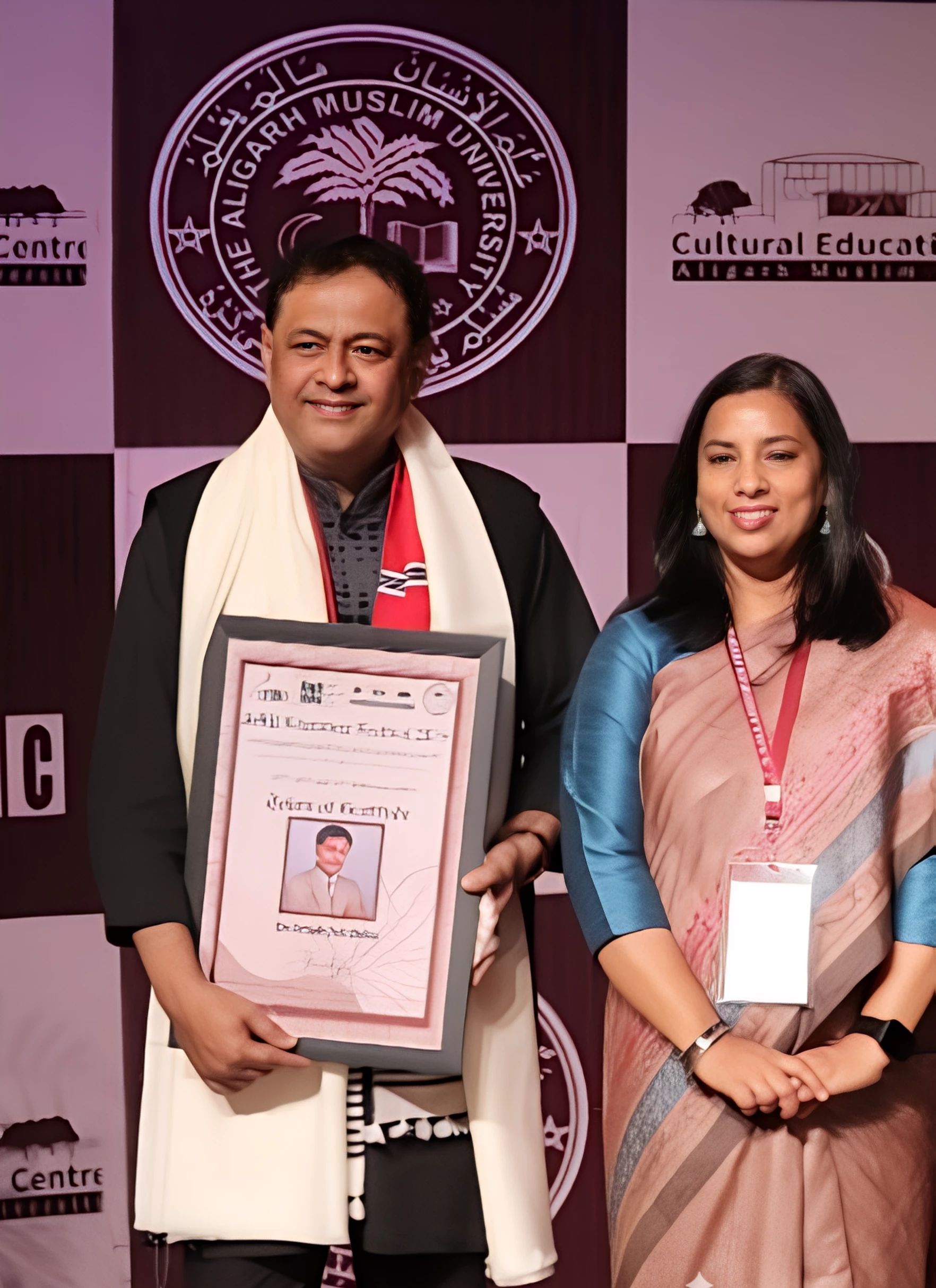
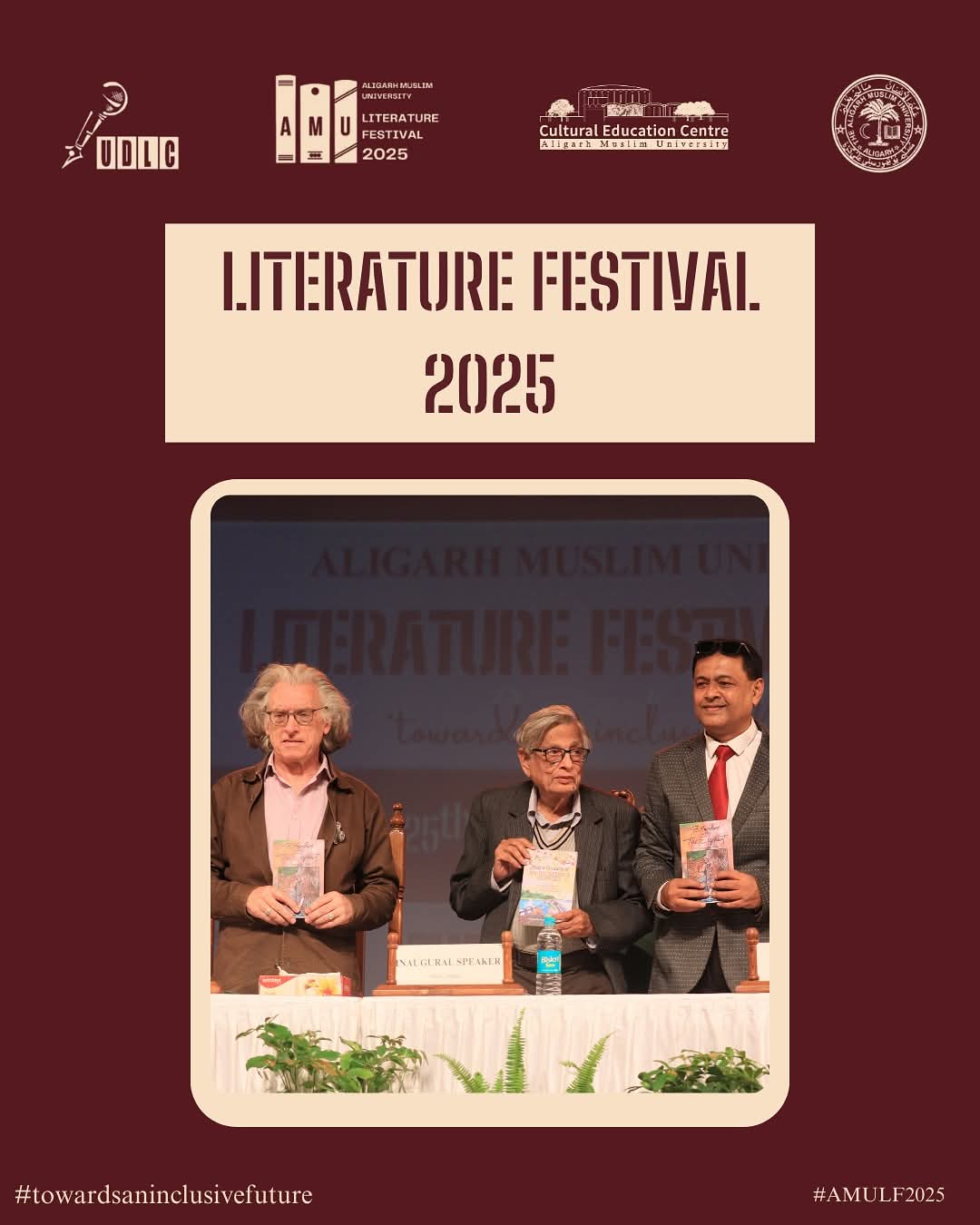
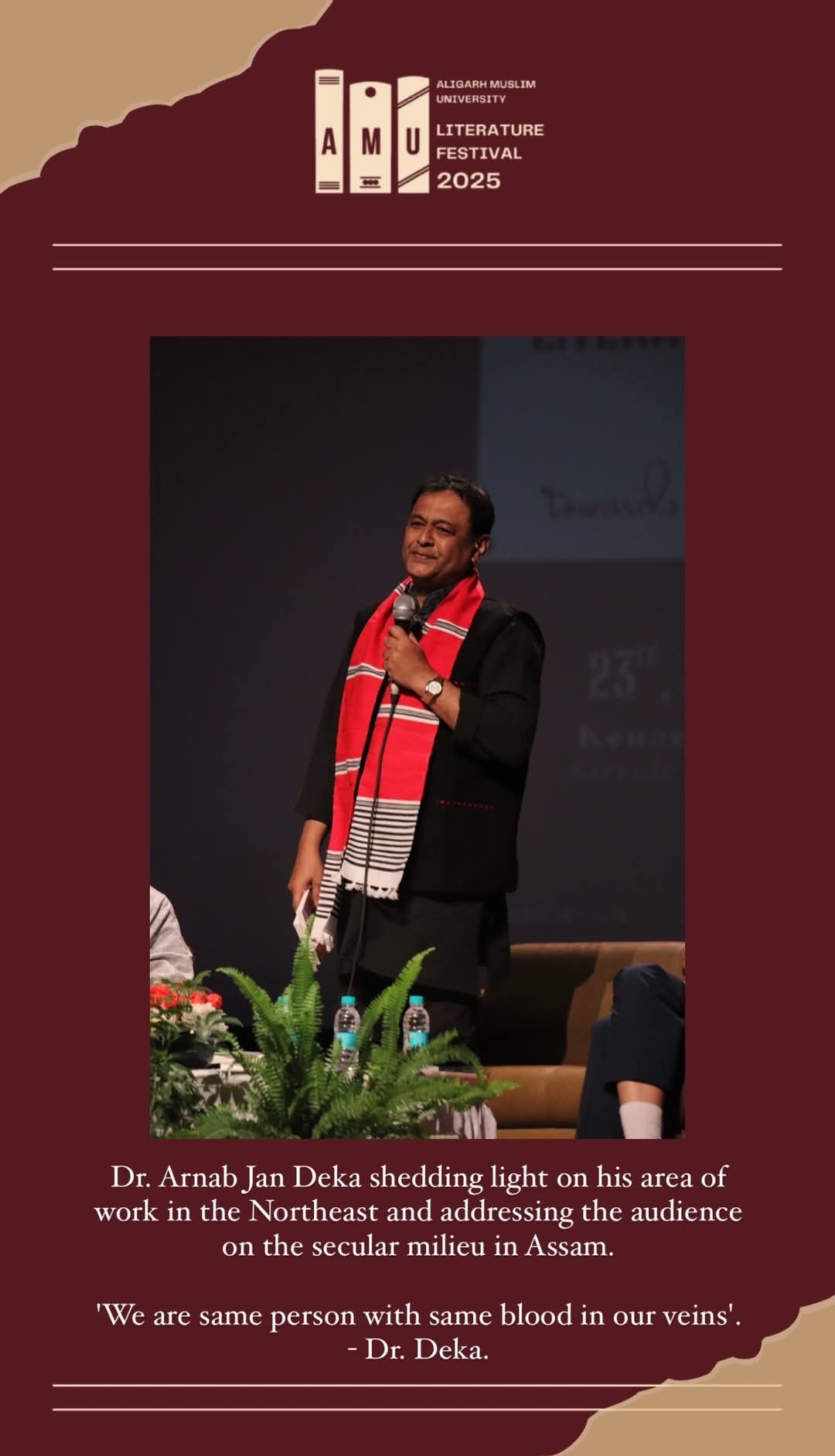

 Dr. Arnab Jan Deka