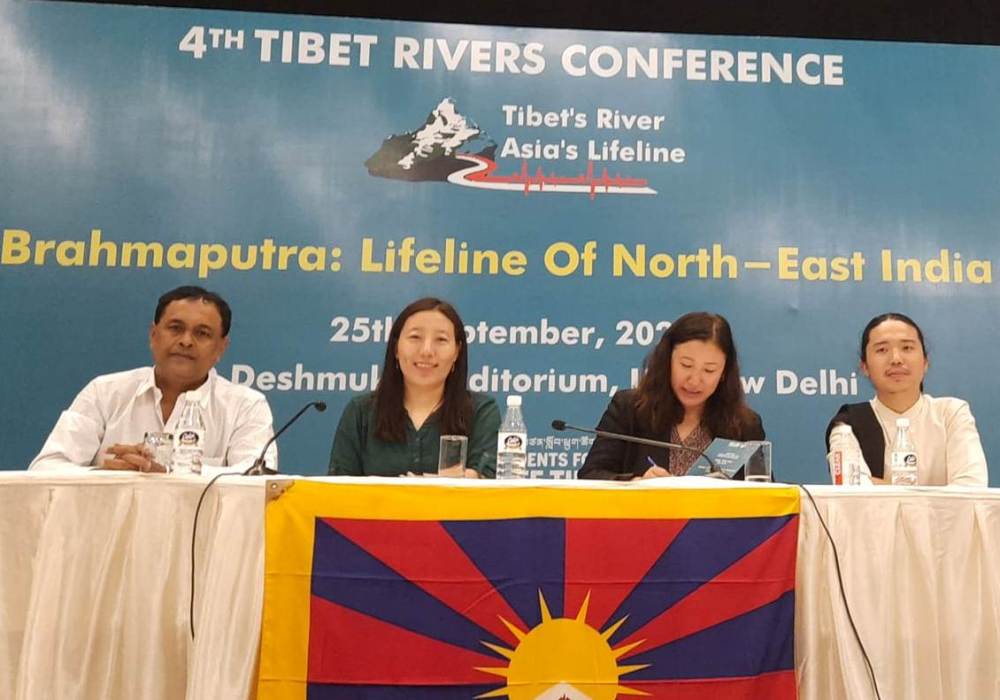
Chinese Dam & Diversion Plan on Brahmaputra opposed at Tibet River Conference held in Delhi
NEW DELHI: The 4th Tibet River Conference has been successfully organised at India International Centre in New Delhi on the occasion of World Water Day on the theme of ‘Brahmaputra : the Lifeline of North East India’ in presence of many leading river engineers, scholars and activists from around the world including Tibet. The program began with an introductory speech with chanting of holy Buddhist sutras by the programme director of Dharamshala based Tibetan Students for a Free Tibet Tenzin Lekdhen Chokhang.
The first speaker was Guwahati based Assamese river engineer, author, filmmaker, jurist and activist Er Arnab Jan Deka, who spoke about the environmental challenges upon the Brahmaputra river created by the Chinese dams and secret diversion plan from India towards mainland China. The speaker during the course of his lecture revealed crucial information gathered over a period of a decade and half long research confirming secret building and operationalising of four mighty dams over the Yarlung Tsangpo or Brahmaputra river by China in Tibet including Zangmu, Jiacha, Dagu and Jiexu and five others at various stages of constructions including Daduqia with power generation capacity of 43800 megawatt and Motuo with 38000 megawatt. He also mentioned about construction of Upper Subansiri river in Tibet by China namely Axianbila. After the Chinese plan to build nine dams as hydro-electric projects and to divert the course of Brahmaputra from India to mainland China was internationally exposed by the Indo-British campaign project ‘Save the Brahmaputra River’ headed by him in 2009, China officially denied any such plan of building dams over Brahmaputra and conveyed the same to India government. But, much later China confirmed the facts after operation of the Zangmu dam in 2015, Jiacha in August 2020 and Dagu in March 2021. Speaker Deka also explained the environmental consequences of these irresponsible acts of China leading to increase in flood and erosion in Assam and other downstream riparian areas inside India and Bangladesh.
The second speaker was Tibet-born environmental researcher from Tibet Third Pole and International Tibet Network Dr Lobsung Yangtso, who spoke about impact of climate change upon Brahmaputra with a case study of Tuting village in Tibet bordering Arunachal Pradesh in India inhabited by displaced Tibetans. She produced field evidence to highlight the miserable conditions of the displaced Tibetans who have been denied basic survival facilities like drinking water and electricity in their present abode. These Tibetans in exile are not even offered any support by Indian government and they are surviving only with financial and other materials support from Tibetan Government-in-Exile in India.
The first session was moderated by eminent rivers scientist Tashi Yangnam, who through her interventions further elaborated on the issues involved with Brahmaputra and Tibet. The lectures were followed by a lively question-answer session where attendees expressed curiosity about Assam’s official position regarding the dams built in Tibet by China over Brahmaputra which have direct bearings on Assam. They were apprised about the long standing support and concern of Assamese people and researchers about the Tibetan’s plight and issues related to dams and diversion plans of Brahmaputra and the international support to the cause received from across the world.
The second session of the conference was attended by Tenzin Nordin, who is legal officer of Tibetan Centre for Human Rights and Democracy, independent researcher Dr Mirza Zulfiqur Rahman and research fellow Dhondup Wangmo and was moderated by Dr Lobsung Yangtso. Dhondup Wangmo spoke about Third Pole Cryosphere which has downstream impacts on Brahmaputra and explained the theory with interesting examples. Dr Mirza spoke about trans-boundary rivers around the Himalayas originating in Tibet and how they influence environmental, economic and political issues around the countries. Tenzin Nordin describe the plight of Tibetan human rights activists inside China who are facing atrocities and imprisonment for a long time for their demand for more autonomy and freedom to practice their religion freely in China. She described heart-wrenching experiences of many exiled Tibetan stalwarts and also put on record the cases of many missing Tibetans inside China. Moderator Dr Lobsang effectively conjured up the thought process of all the speakers with her enlightened titbits and wisdom. The entire conference was a very lively and interactive one as all the speakers were asked many interesting questions by attending students and scholars. The audience called for more proactive collaboration between Tibetan and Assamese activists and researchers as close neighbours on Brahmaputra research and protest again Chinese dams and diversion plans.
The conference concluded on a positive note with the hope that it will open up more international deliberations on Chinese dams over Brahmaputra and the environment challenges faced by the river due to careless human interventions. Vote of thanks was offered by Delhi chapter president of the Tibetan students body Nyidon Tenzin and was concluded with a Tibetan lunch at a prominent Tibetan restaurant inside Tibetan Colony in Majnu Ka Tila in Central Delhi.
In photo, 4th Tibet International River Conference on Brahmaputra in Delhi attended by (from left) Arnab Jan Deka, Tashi Yangnam, Dr Lobsang Yangtso, Tenzin Lekdhen Chokhang
 Dr. Arnab Jan Deka